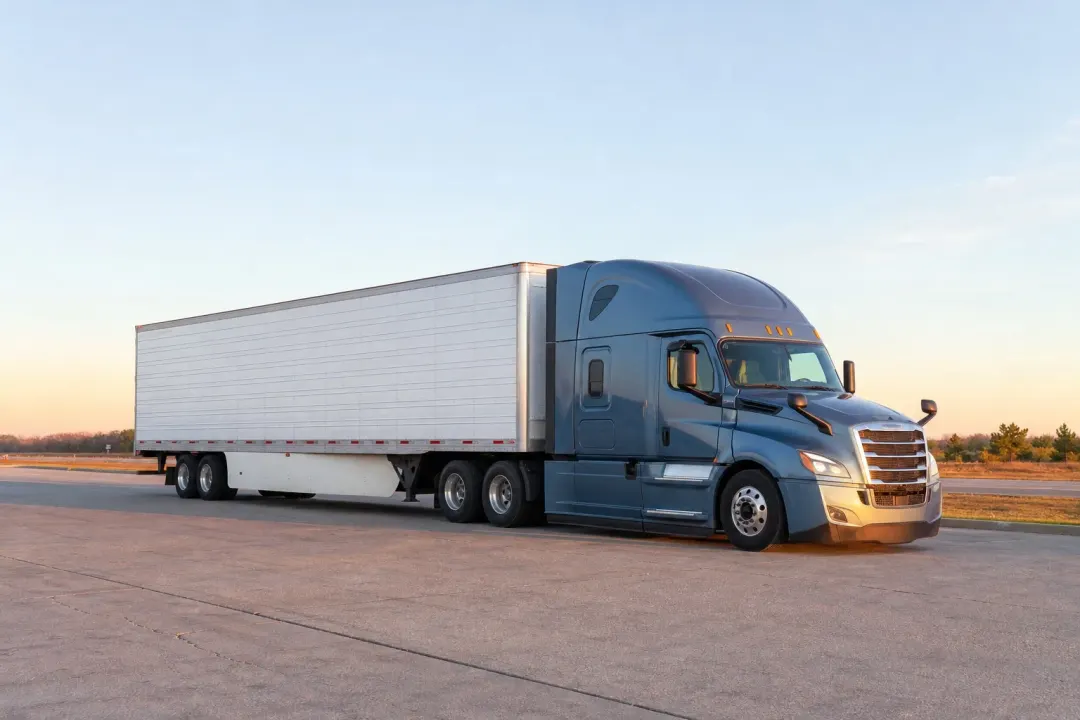
A roadside inspection doesn't have to be stressful. Most clean inspections come down to habits you build long before you see the scale house or the officer's lights. This guide walks you through those habits step by step.
Why a clean inspection is worth the effort
A clean inspection keeps you moving. It also protects your record, which matters to insurance, to carriers and to your own peace of mind. A violation can cost you time at the roadside and a headache later.
At FreightWay Logistics, we reward clean DOT inspections with safety bonuses. Check the details with our team when you talk to us.
Step 1: Do a real pre-trip, every time
Don't treat the pre-trip as a box to tick. Walk the truck and the trailer like an inspector would. Look, touch and listen.
- Tires: check for cuts, bulges, low pressure, uneven wear and anything that looks loose around the wheels.
- Wheels and hubs: look for missing or loose lug nuts, leaks and cracked parts.
- Brakes: check hoses, chambers, slack adjusters and linings. Listen for air leaks when the system is built up.
- Lights and reflectors: test headlights, brake lights, turn signals, markers and hazards. Replace anything that's out or cracked.
- Steering and suspension: look for worn, loose or broken parts.
- Fluids: look under the truck for oil, fuel or coolant leaks.
- Windshield and mirrors: make sure you can see clearly and nothing is cracked in your line of sight.
- Wipers and horn: make sure both work.
- Coupling: check the fifth wheel, kingpin area, air lines and electrical cord.
If you find a problem, fix it before you roll. Write it up. A defect you knew about and ignored looks much worse than one you caught and handled.
Step 2: Keep your paperwork in order
Paperwork problems are some of the easiest violations to avoid. Keep everything in one folder or pouch within easy reach.
- Your valid Class A CDL and medical card.
- Registration for the truck and the trailer.
- Proof of insurance.
- Your annual inspection proof for the equipment.
- Any permits your route needs.
- Bills of lading or shipping papers for the load.
- Your ELD information sheet and instructions, plus a few blank log sheets in case of a malfunction.
Check expiration dates every month. An expired card in your wallet can turn a clean stop into a violation.
Step 3: Stay on top of your logs
Your ELD is part of the inspection. Make sure you are logged in under your own name, your statuses are correct and any unassigned driving time has been dealt with.
Plan your trips so you aren't pushing your hours at the end of the day. Rushed drivers make mistakes. For the exact hours-of-service rules, go to the official FMCSA website rather than relying on word of mouth.
Step 4: Secure the load and check it again
Cargo securement is a common reason for out-of-service orders. Before you leave the shipper:
- Use enough tie-downs or straps in good condition. Throw out anything frayed or cut.
- Check that blocking and bracing are tight.
- Make sure the load is balanced and the doors are properly closed.
Check the load again after the first stretch of driving, since loads can shift. Then check at every stop after that.
Step 5: Keep the cab and your own gear in shape
Inspectors notice the whole picture. A tidy truck says you take the job seriously.
- Keep your fire extinguisher charged and mounted.
- Carry your warning devices, such as reflective triangles, where you can reach them.
- Keep the cab free of loose items near the pedals.
- Make sure your seat belt works and you wear it.
Step 6: Know what to do when you're pulled in
How you act during the stop matters. Stay calm and polite.
- Pull in where you're directed and set the brake.
- Shut off the engine if you're asked to.
- Have your license, medical card and paperwork ready to hand over.
- Answer questions simply and honestly. You don't need to explain more than you're asked.
- Follow instructions about lights, brakes and steering checks.
- Stay out of the way while the officer works, and stay in a safe place.
If you disagree with something on the report, don't argue at the roadside. Take notes and follow the official process afterward.
Step 7: Review every report
Whether the inspection is clean or not, read the report. If it's clean, note what you did right and keep doing it. If there are violations, fix the cause, keep records of the repair and look into the official review process for anything that may be wrong. The FMCSA site explains how data challenges work.
A quick weekly checklist
- Tires and brakes looked over by a professional
- Lights and reflectors all working
- Paperwork current and in one place
- ELD clean and up to date
- Straps, chains and bars in good condition
- Extinguisher and triangles in place
Drive clean with FreightWay
Clean inspections should pay off for you. FreightWay Logistics offers safety bonuses for clean DOT inspections, along with no forced dispatch, a plate program and state permits if needed, direct deposit every Friday and a fuel discount. We run local, regional and OTR routes, and we're pet, rider and SAP friendly.
To drive with us you need a Class A CDL, at least two years of experience, and your own or a leased semi-truck. Ready to talk? Apply on our website or give our office a call.